
You’re invited to join us for the
Bird of the Year Celebration!
March 21, 2026
The Belted Kingfisher
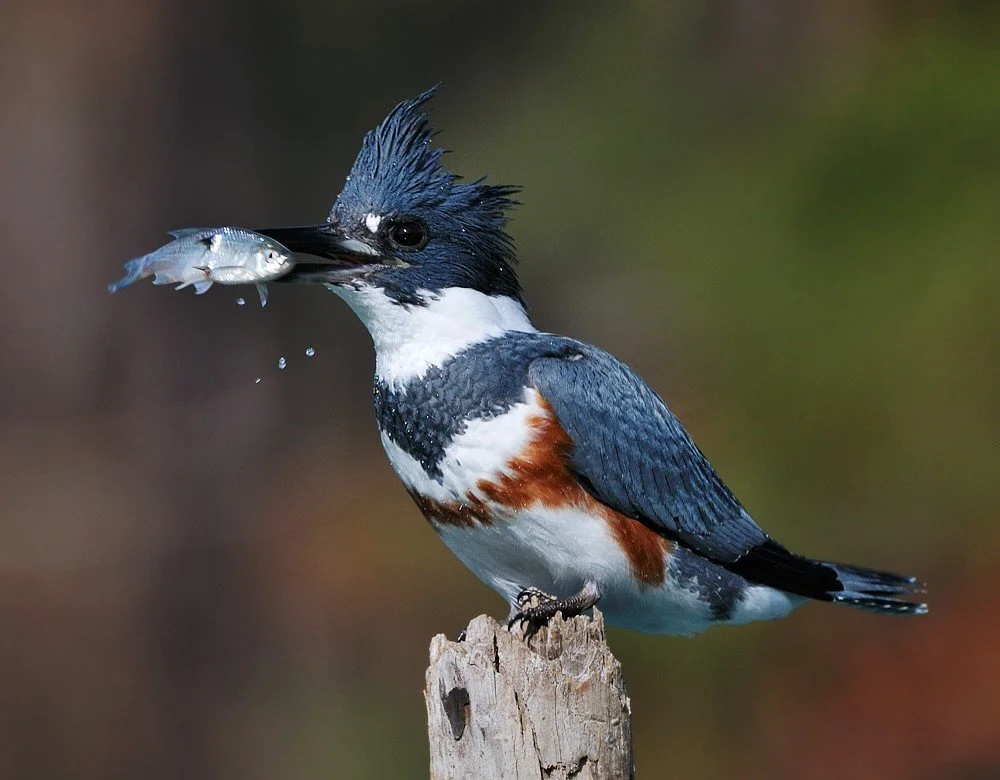
The Bird of the Year program helps teach kids and adults about a new bird each year. In 2026, the Friends of Seven Islands has selected the Belted Kingfisher as the Bird of the Year.
Common Name: Belted Kingfisher
Scientific name: Megaceryle alcyon
Length: 11 -14” in length with a wingspan of 19-23 inches.
Weight: 4.9-6.0 oz
Average Lifespan: 6-10 years in the wild.
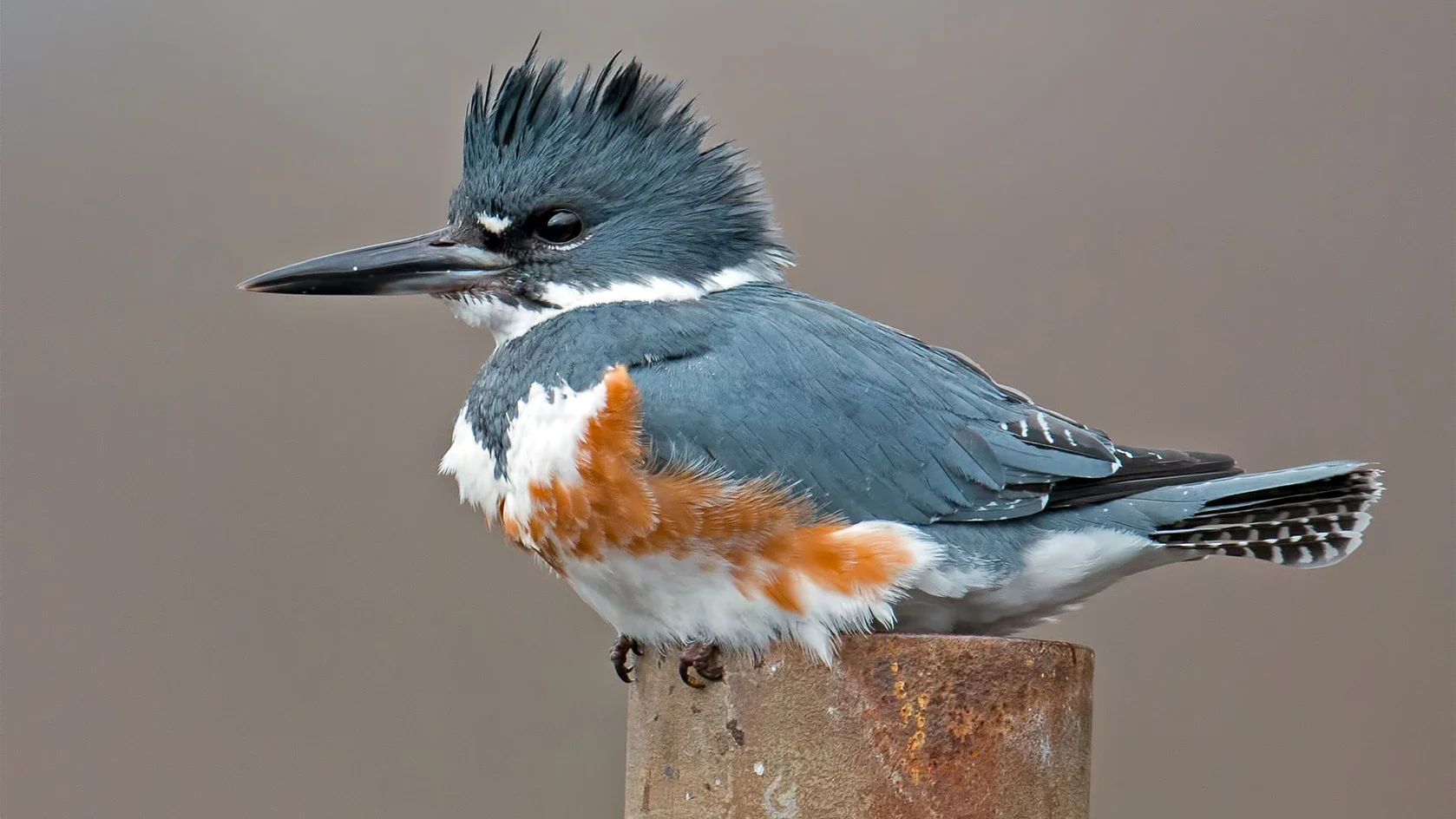
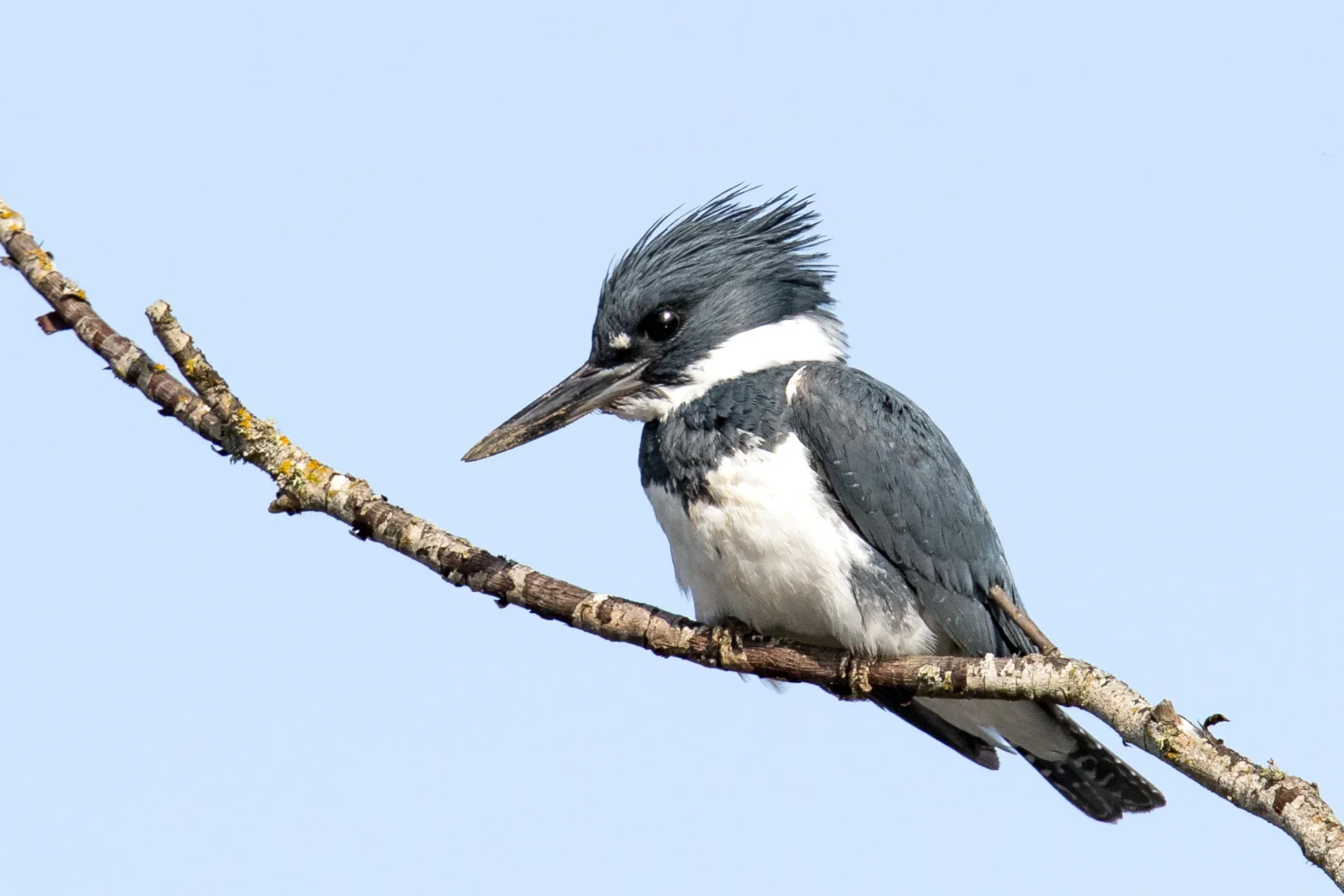
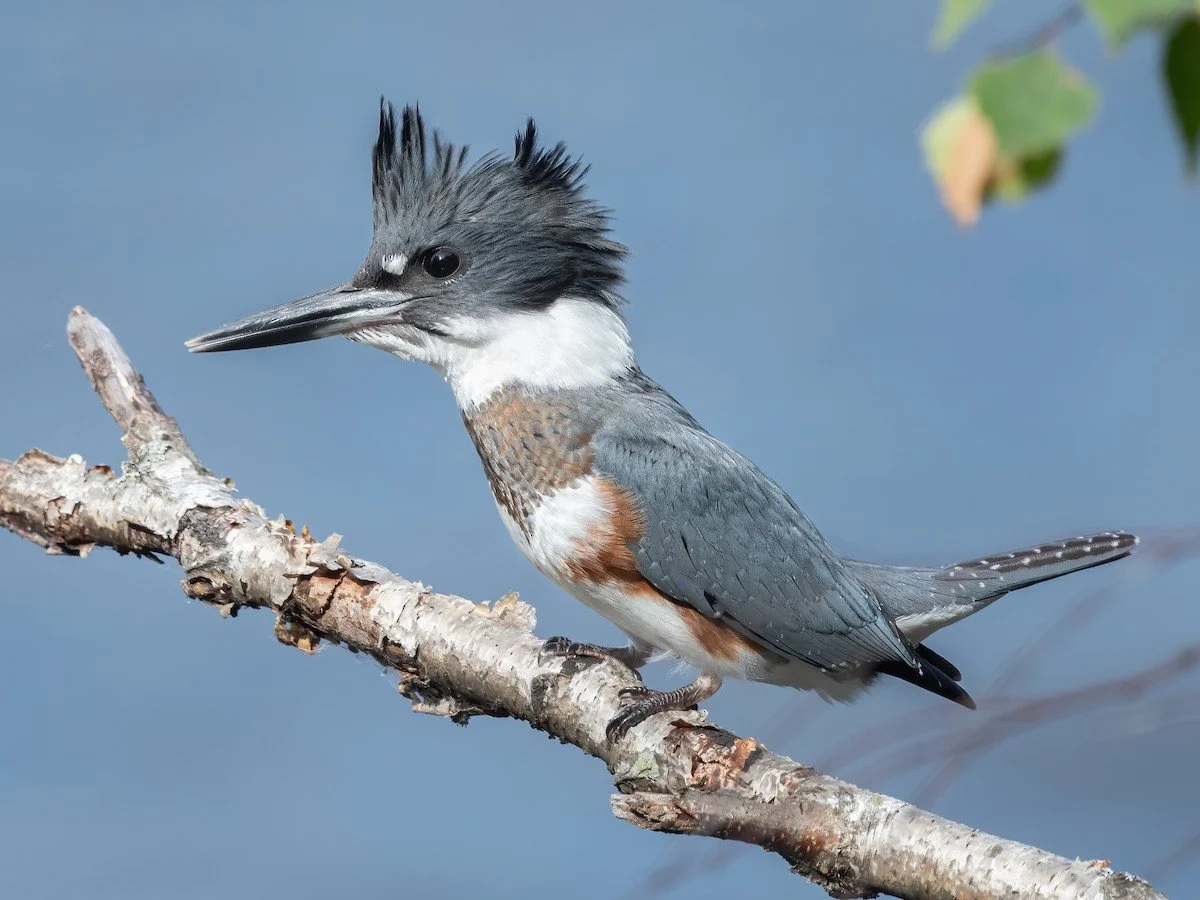
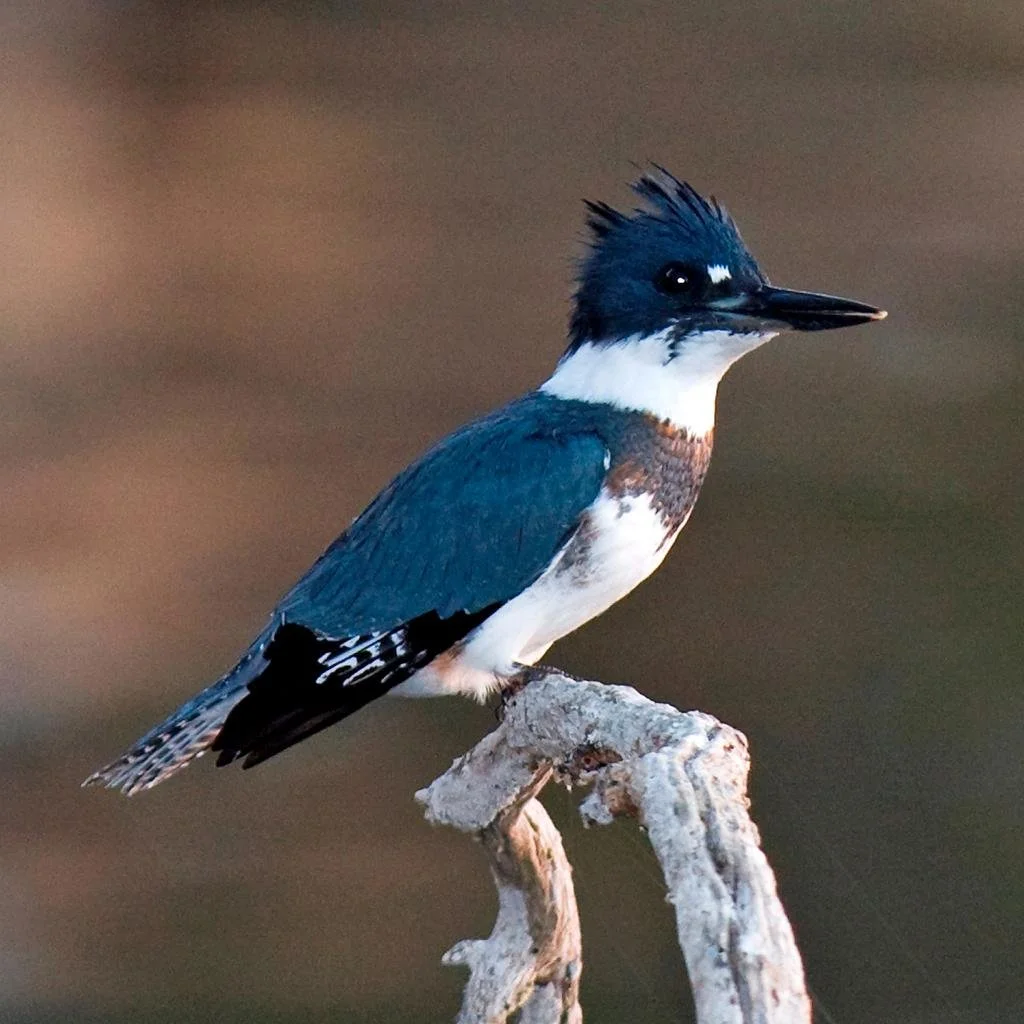
Belted Kingfishers are stocky, large-headed birds (roughly robin-sized) with a shaggy crest on the top and back of the head and a straight, thick, pointed bill. Their legs are short and their tails are medium length and square-tipped.
One of four kingfisher species in North America, they are blue-gray above with fine white spotting on the wings and tail. The underparts are white with a broad blue breast band. Females also have a broad rusty band across their bellies. Juveniles show irregular rusty spotting in the breast band.
Habitat
These birds are rarely far from water, spending much of their time perched alone along the edges of streams, lakes, and estuaries, searching for small fish. They fly quickly up and down rivers and shorelines giving loud, rattling calls. They hunt either by plunging directly from a perch, or by hovering over the water, bill downward, before diving after a fish. A great place to see them in the park are the trees on the islands north of the pedestrian bridge.
Nesting
Belted Kingfishers nest in burrows that they dig into soft earthen banks, usually adjacent to or directly over water. This geographically-widespread kingfisher spends winters in areas where most bodies of water don’t freeze so that they have continual access to their aquatic foods.
Diet
While they primarily dine on small fish, Belted Kingfishers also eat crayfish, frogs, tadpoles, and aquatic insects. They are also known to take prey from land, including small mammals, young birds, and reptiles. They have also been reported to eat berries.
Behavior
Belted Kingfishers are often seen while foraging by plunging headfirst into water with closed eyes and capturing prey near the water’s surface. They watch for prey from branches, wires, rocks, or other perches above the water. They also regularly hover above the water before diving. Bones, scales, shells, and other indigestible parts of prey are disgorged later as pellets, similar to those of owls.
Fun Facts
The Belted Kingfisher is one of the few bird species in which the female is more brightly colored than the male.
During the breeding season, a Belted Kingfisher pair will defend a nesting territory over half a mile long in vegetation along a river or stream.
Pleistocene fossils of Belted Kingfishers (to 600,000 years old) have been unearthed in Florida, Virginia, Tennessee, and Texas. The oldest known fossil in the kingfisher genus is two million years old, found in Alachua county, Florida.
Bring Awareness, Become a Friend of Seven Islands!
Donating to the Friends of Seven Islands helps us support the many birds that call the Seven Islands State Birding Park home, including our Bird of the Year!